The following is a guest post from Jason Hershman, founder and fractional CFO of Point. Opinions are the author’s own.
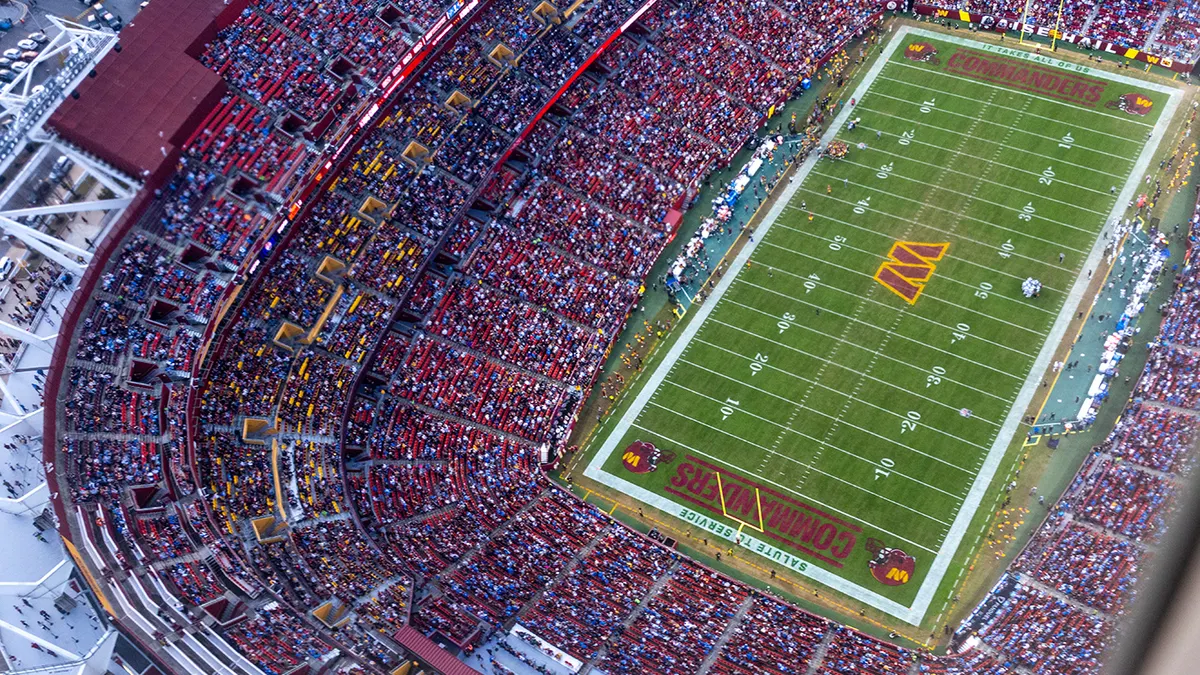
Seattle Seahawks quarterback Sam Darnold hoisted the Lombardi Trophy in February after beating the New England Patriots in the Super Bowl at Levi's Stadium in Santa Clara.
California's thank-you note arrived in the form of a $249,000 tax bill.
You may have seen the hot takes. “Darnold lost $71,000 for winning the Super Bowl.” “California’s tax policy is a disaster!” Calls from talking heads like Boomer Esiason for the NFLPA to boycott California Super Bowls. And so on.
The problem? Those takes are all half-truths.
What really happened was the NFL paid each winning player $178,000. California's “jock tax” prorated Darnold's $33.5 million average annual salary across eight duty days (the time the Seahawks spent in California to prepare for the Super Bowl) at a 13.3% rate, and the resulting state tax bill ran about $71,000 north of that check.
Two line items, zero context. That's what went viral.
What didn't go viral? The $2.5 million Super Bowl incentive baked into his Seahawks contract. Or the $4 million in performance and playoff bonuses he collected during the postseason.
Isolating one bonus against one tax obligation and calling it a loss is heresy in our world.
So I dug into the jock tax and the real truth behind it. Sure, sports is the hook, but the fact is, it’s really more of a multi-state wage sourcing problem with roots going back decades, and one that every CFO should understand.
The jock tax didn't start with Sam Darnold. It didn't even start in 1991, though that's where most people pick up the story.
California had been taxing nonresident athletes since at least the late 1960s. A San Diego Chargers kicker named Dennis Partee challenged the practice in a 1976 appeal. New York and Wisconsin followed with their own versions before the '80s were over.
But the catalyst for the national domino effect was Michael Jordan. After the Bulls beat the Lakers in the 1991 NBA Finals, California's Franchise Tax Board sent Jordan and his teammates a bill for income earned during their time in the state. Illinois fired back with a retaliatory law nicknamed "Michael Jordan's Revenge," targeting visiting athletes from any state that taxed Illinois-based players.
Every state with an income tax and a pro sports team eventually followed suit. Today, NFL players file eight to 12 state returns per season. NBA players file 16 to 20. MLB players file up to 25.
How the jock tax really works
The concept behind the jock tax is simple. The compliance is not. Every state with an income tax wants its cut of athlete compensation, and the formula they use to grab it revolves around one metric: duty days.
Most states use the same core equation: (Duty days worked in state ÷ total duty days) × total compensation = taxable income in that state.
So, a player earning $10 million with 200 total duty days who spends 10 of them in California owes the state taxes on $500,000. At California's 13.3% top rate, that's a $66,500 bill for roughly a week and a half of work.
"Total compensation" covers salary, game checks and performance bonuses. Endorsement income typically stays off the table since it's not tied to on-field services in a specific state.
The formula looks clean until you realize each state defines "duty days" differently. California counts every working day from preseason through the postseason. New York includes trainers and coaches under 20 NYCRR §132.22. Illinois specifically lists game days, practice days and team travel days in its statute. Ohio had to overhaul its approach after the state Supreme Court ruled Cleveland's games-only method unconstitutional in 2015.
Some states also define duty days differently for playoff games versus regular season. And a handful of states have reciprocal agreements that reduce double taxation. Most don't.
A closer look at the tax map
The range is all over the place. California sits at the top with a 13.3% rate (plus 1.3% SDI). New York hits 10.9%. New Jersey comes in at 10.75%. Massachusetts charges 9% once you clear $1 million. Illinois takes a flat 4.95%. Pennsylvania's flat 3.07% rate applies to all wages.
Meanwhile, Florida and Texas charge nothing, and Washington, D.C., can't tax nonresidents at all.
However, state taxes are only part of the equation. Many cities want their cut too. Philadelphia tacks on a 3.44% local wage tax for nonresidents. Detroit layers a 2.4% city tax on top of Michigan's 4.25% state rate. Pittsburgh tried a 3% facility fee on visiting players, but a court struck it down in 2025.
No wonder so many athletes choose residency in zero-tax jurisdictions.
Three scenarios that put real numbers on the board
The duty-day formula fits on a napkin. The tax bill it produces can run six or seven figures, depending on whose napkin you're writing on. In other words, the gap between a max-contract quarterback and a league-minimum rookie tells two very different financial stories, even when both players suit up for the same game in the same state. I ran some numbers on three scenarios to show how the jock tax scales.
As the Dallas Cowboys' star quarterback, Dak Prescott's contract averages $60 million per year. The Cowboys play in Texas, which has no state income tax. But the moment the Cowboys cross into a tax-heavy state, that changes.
Take a regular-season road game against the Giants at MetLife Stadium in New Jersey. Prescott flies in, practices, plays Sunday and flies home. That's roughly three duty days out of about 200 total for the season.
New Jersey claims 1.5% of his annual compensation, which puts approximately $900,000 of Prescott's income on their tax rolls. At New Jersey's top rate of 10.75%, he owes the state about $96,750 for one road trip.
One game. Three days. Nearly six figures in state taxes he'd never owe if the NFL scheduled that matchup in Arlington. Multiply that across every road game in a tax-collecting state, and you start to see why athlete tax planning is its own industry.
Now picture the other end of the pay scale
An undrafted rookie on the Miami Dolphins earns the 2025 league minimum of $840,000. Florida has no state income tax, so just like Prescott in Texas, he pays zero state tax on most of his income. Then the schedule sends him to SoFi Stadium to play the Los Angeles Rams.
The team flies to Los Angeles on Friday, plays Sunday and heads home. That's roughly three duty days out of about 200 for the season. California claims 1.5% of his annual salary, which puts about $12,600 on its tax rolls. After you run that through California's brackets and add SDI, his total bill lands somewhere around $1,500 to $1,700.
That's not going to bankrupt anyone. But remember, he's earning $840,000 before federal taxes, agent fees and union dues. Every dollar hits differently at that pay grade. Then, stack eight or nine road games in tax-heavy states across a full season, and a league-minimum player can watch $10,000 to $15,000 disappear.
The Darnold case study
Back to the headline that started all of this.
Sam Darnold signed a three-year, $105 million deal with Seattle, averaging about $35 million annually when you factor in his base salary and prorated signing bonus.
The Seahawks arrived in California a full week before the Super Bowl. Between travel, media obligations, practices and the game itself, Darnold logged eight duty days out of roughly 160 total for the season. California claimed 5% of his annual compensation, which put approximately $1.875 million on its books. At the state's 13.3% top rate, his California tax bill came to about $249,000.
The NFL paid him $178,000 for winning the game. That's where the viral math stops and the bad analysis begins.
What nobody tweeted about: Darnold's contract included a $2.5 million Super Bowl victory incentive. Combined with the league bonus, he earned $2.678 million from winning the championship. Subtract the $249,000 California tax bill, and he still netted roughly $2.4 million in new income from the Super Bowl alone.
The "$71,000 loss" narrative only works if you compare the league bonus to the tax bill and ignore everything else on the ledger. No competent finance team would ever frame it that way.
What should your finance team do about it?
I could probably teach you the duty-day formula in about 30 seconds. But operationalizing it across 53 players, 17 games (not including playoffs) and two dozen tax jurisdictions is a completely different animal. That's where finance teams either prove their value or end up writing checks to auditors that make the original tax bill look like a parking ticket.
I've seen it happen outside of sports, too. Multi-state wage sourcing trips up companies that should know better every single tax season.
So here's what a sharp finance operation should look like with respect to the jock tax.
Build duty-day logs before training camp, not after tax season: Start logging every travel day, practice and team meeting for every rostered employee in July. I promise you, nobody wants to be the person reconstructing duty days from old flight itineraries and hotel folios the week before a filing deadline.
Automate withholding or pay the taxman: Twenty-plus jurisdictions with different rates, different rules, and different definitions of "duty day" will break any spreadsheet. Get a payroll vendor who specializes in athlete or entertainment withholding and hand them the keys. The cost of the vendor is a fraction of the cost of getting it wrong.
File composite returns where you can: New York and Pennsylvania both allow group filings that roll individual nonresident returns into one submission. Fewer filings, fewer errors and your payroll team doesn't quit in April.
Treat city taxes like their own beast: Philadelphia's 3.44% nonresident wage tax and Detroit's 2.4% city tax don't care that you already filed at the state level. I've watched organizations treat local taxes as an afterthought and then act surprised when the city comes knocking. They always come knocking.
Run exposure scenarios before week one: Pull the schedule, map every road game to a tax jurisdiction and model the withholding hit across your full roster. A CFO who discovers a seven-figure compliance gap in March had the entire season to catch it. That's not a tax problem. That's a leadership problem.
Nobody said winning was tax-free
The jock tax isn't going anywhere. Every state with an income tax and a professional sports team treats visiting athletes as a revenue source, and that reality won't change just because Boomer Esiason got mad on the radio.
The problem was never the tax itself. The problem is lazy math and lazier headlines. Sam Darnold didn't lose money winning the Super Bowl. He made millions. Someone just cherry-picked two numbers off his ledger and called it a loss.
From where I sit, the jock tax is a fixed cost of running a traveling business. You budget for it, you track it and you build systems that handle it before the season starts. The teams and players who get burned are the ones who treat it like a surprise every offseason.
Track your duty days. Automate your withholding. Model your exposure before the season starts. Then go win your games.