

The Trial Balance is CFO.com’s weekly preview of stories, stats and events to help you prepare.
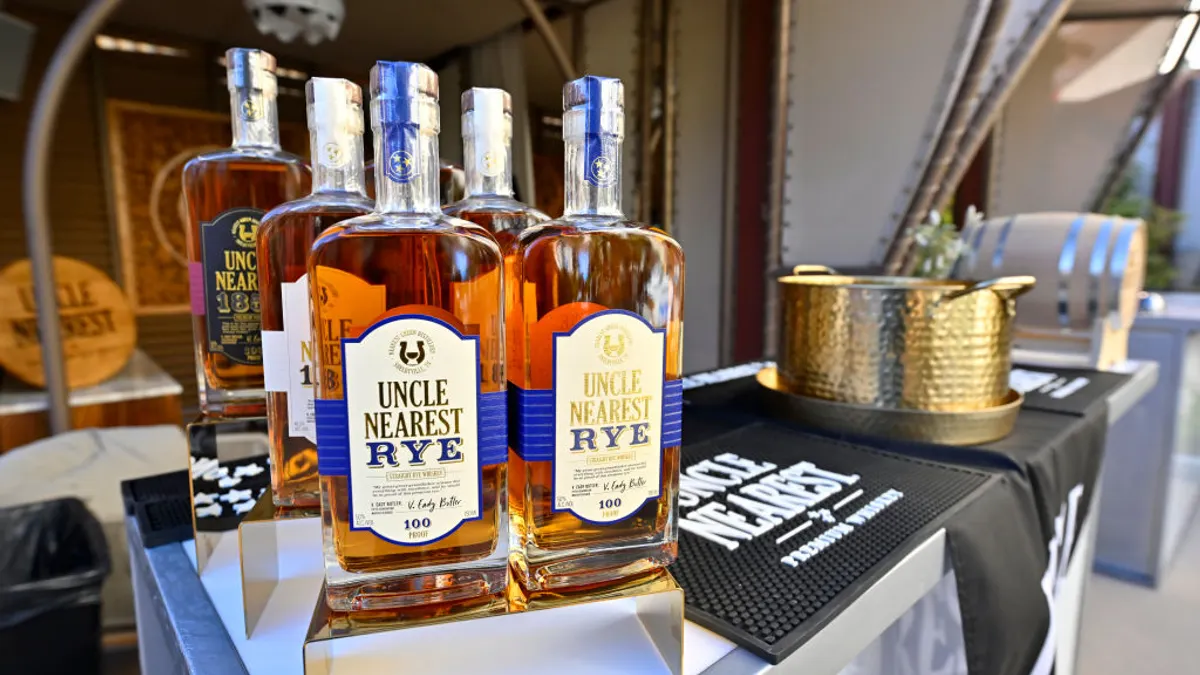
Part 1 — Whiskey maker Uncle Nearest's founder is appealing a judge’s order to dismiss an attempt to declare bankruptcy.
The founder of a Tennessee whiskey upstart who once accused her CFO of fraud has now tried, and failed, to declare bankruptcy on the company’s behalf.
That’s the upshot of the latest chapter in whiskey maker Uncle Nearest’s ongoing legal and financial battle.
On Thursday, a federal judge denied Uncle Nearest founder Fawn Weaver’s attempt to declare Chapter 11 bankruptcy for the company. That came after lender Farm Credit Mid-America in July sued the whiskey company, alleging the brand had defaulted on loans totaling $108 million. That led to Uncle Nearest being placed into receivership in August, a fact that would later derail Weaver’s plan to declare bankruptcy.
In a filing in the U.S. Bankruptcy Court for the Eastern District of Tennessee late last week, Judge Suzanne Bauknight dismissed Weaver’s request to move the company into Chapter 11 bankruptcy. In her order to dismiss, Bauknight referenced Uncle Nearest’s move into receivership, noting that only court-appointed receiver Phillip Young has the authority to seek bankruptcy on the company’s behalf.
“Further, the Order Approving Receiver expressly authorizes only Mr. Young to act on behalf of Debtor with respect to actions that must be authorized or accomplished by a board of directors for a corporation or its members for a limited liability company, including the authority to file a bankruptcy case for the company,” Judge Bauknight wrote in the March 19 order.
But Weaver is not giving up quite yet, having filed a notice of appeal the next day, according to court records.
Weaver’s bankruptcy attempt also coincided with yet another lawsuit, this one against Farm Credit Mid-America. On March 17, Weaver and Uncle Nearest’s largest shareholder, Grant Sidney, announced that they filed a suit in New York State Supreme Court alleging the lender engaged in a “smear campaign against the fast-growing whiskey brand by knowingly circulating false accusations, including claims of missing inventory, financial misconduct, negative cash flow, and insolvency.”
Plaintiffs in that case said Farm Credit Mid-America made such accusations “to protect the lender’s own bankers and deflect scrutiny from failures in the administration of the credit facility,” according to a March 17 news release issued by Grant Sidney.
That same release mentioned Weaver’s filing for Chapter 11 protection and said the move would bring “court-appointed receivership to an end.”
In late 2025, after Uncle Nearest entered receivership, Fawn and her co-founder and husband, Keith Weaver, had filed a suit against the whiskey brand’s CFO, Michael Senzaki. That suit had alleged that Senzaki engaged in financial misconduct and misrepresented the company’s financial condition.
Grant Sidney and Farm Credit Mid-America didn’t reply to emailed requests for comment on Friday.
Founded in 2017, Uncle Nearest is named after Nathan “Nearest” Green, an enslaved Black man who taught Jack Daniel how to distill whiskey. By 2023, Fawn Weaver said the company was valued at $1.1 billion.
Part 2 — This week
Here’s a list of important market events slated for the week ahead.
Monday, March 23
- Construction spending, Jan. delayed report
- New home sales, Feb.
Tuesday, March 24
- U.S. productivity, Q4 revision
- S&P flash U.S. services PMI, March
- S&P flash U.S. manufacturing PMI, March
Wednesday, March 25
- Import price index, Feb.
- Export price index, Feb.
Thursday, March 26
Friday, March 27
- Consumer sentiment, March final
Part 3 — Weekly listen: Faire CFO on Run the Numbers with CJ Gustafson
Jason Lee, CFO of Faire, joined the Run the Numbers podcast to discuss how the wholesale marketplace serves retailers, its revenue model and how to manage metrics.
Lee told host CJ Gustafson that metric ownership should be shared to be meaningful, and that each business metric should have a business owner and also a financial or analytical owner.
“The financial or analytical owner ensures the metric is well-defined, well-understood, actually useful and has the right feedback loop. The business owner, on the other hand, focuses on learning and taking action to drive the right set of activities,” said Lee. “I’ve been very particular about having embedded finance partners throughout the organization. I call them ‘mini CFOs’ who are close enough to the business, product or function to bring financial context and be better informed about not only the right metrics but also the right shared ownership.”
However, this approach only works if there are not too many metrics, according to Lee.
“If there are too many, ownership becomes diluted, and it’s hard to maintain focus. The word ‘shared’ is nuanced because if everybody owns a metric, then nobody truly owns it,” said Lee. “For example, let’s say registrations are a key metric for an inbound company. If everybody owns registrations, it becomes hard to drive change or make adjustments within the organization.”