


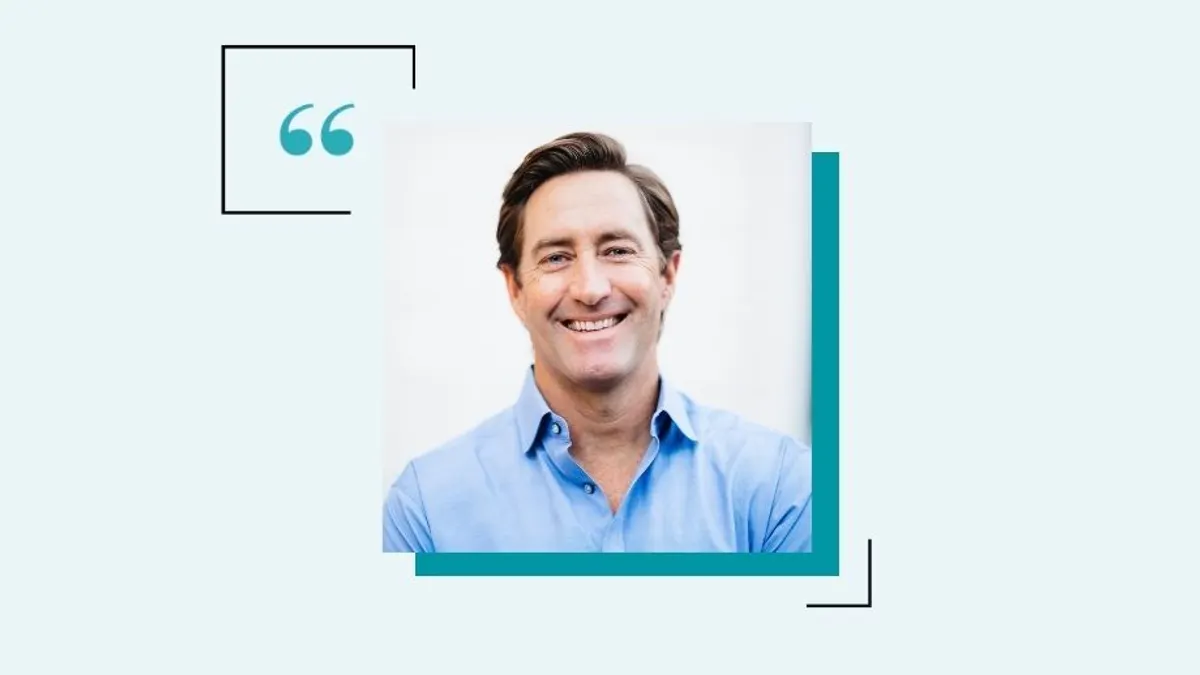
For Brent Loder, the answer to modern business problems sometimes comes from taking a careful look at the past. It’s a perspective he gained as an investor and history buff, and one he’s now bringing to health care staffing firm Medely.
Founded in 2015 and based in Santa Monica, California, the firm provides a digital platform that connects health facilities with much-needed workers for per diem shifts and local or travel assignments. Loder, who’s worked at similar digital-first businesses like Airbnb and car rental platform Turo, is convinced it’s the future of health care staffing and a way to bring down costs. He joined Medely in May of 2025.
The company’s “bread and butter” comes from outpatient surgery centers, Loder says, but it also has a growing enterprise segment serving hospitals and larger health systems. Medely, which employs about 200 people directly, says that over 300,000 clinicians have used its platform.
In an interview with CFO.com, Loder shares how his prior experience at Airbnb and other marketplace businesses informs his leadership today, his take on the current IPO market and why he believes health care is ripe for disruption.
Brent Loder

CFO, Medely
Notable previous employers:
- Turo
- Airbnb
- HotelTonight
- Franklin Templeton Investments
This interview has been edited for brevity and clarity.
DAN NIEPOW: You got a bachelor’s degree in history. How did you end up in finance?
BRENT LODER: Some advice I got early in my days at UCLA was to pick a major that you enjoy. Early on in my tenure there, I knew that I loved history and I loved reading. I was just fascinated by it, and so I decided to become a history major. At that point, I had really no idea what I was going to do career-wise after school. But after taking some different classes, I found my love for business, numbers, finance and math, so I decided to add a minor in business. That ultimately translated into my first job coming out of undergrad as an analyst at Morgan Stanley in investment banking, so I pretty quickly transitioned that history degree into finance.
I’d add that history is learning about how things in the past influenced the future. That’s a lot of what we do in business: You’ve got to decipher what’s happened and how that might influence the future. I think there is a read-through in terms of history and business. It’s not totally disconnected.
You previously worked in finance for Airbnb and car rental company Turo. What led you to take your first permanent CFO position at a health care company?
If you look at my experience as an operator going back over the last almost 10 years now, it's been in marketplace businesses. I became sort of an expert in marketplace businesses, and I love them. When I was looking to transition into becoming a CFO, I knew I wanted another marketplace business. I do love the hospitality, travel and leisure space, but I was very open to health care. It has always been something that's been on my radar, even from back in my time as an investor. It touches everybody, and it’s mission-driven. In those respects, the opportunity at Medely checked all the boxes I had.
Medely’s CEO also cited your experience in “marketplace” businesses among the reasons for hiring you. How do you define such businesses, and what has kept you interested in them over the years?
I view marketplace businesses as those platforms that bring together supply and demand, buyers and sellers. Think about something like eBay. My interest in the sector goes back to my days as an investor.
I think that marketplace businesses enjoy considerable, enduring competitive advantages, and the primary one is network effects. In these two-sided marketplaces, growth in one side influences the other side. Airbnb is a great example of this: You have hosts renting out space on one side and guests on the other. A growing number of hosts creates more optionality and more supply. That, in turn, influences dynamics on the other side, giving guests more choice. It’s our job as operators to feed that, to fuel that, to accelerate that, to remove any friction from the system and allow businesses to thrive.
What would you say is the biggest lesson learned during your year as head of finance for Airbnb?
Seeing firsthand that finance is strategy; it's not just reporting the numbers. When you're at the scale of Airbnb, finance can't be just closing the books. It's got to be integrated into the strategy of the business. It's helping to shape things like take-rate decisions and deciding where to allocate capital. I quickly saw that finance leaders influence decisions before money is spent, and not just explain the results afterwards.
You worked at Turo for just over five years. What kept you there?
It’s a phenomenal marketplace, and the last game in town in terms of peer-to-peer carsharing. There was also a big opportunity for company growth. Over the course of my time there, I saw the business grow sevenfold, in terms of revenue, while headcount went up fourfold. Plus, the company has a phenomenal culture, instilled by CEO Andre Haddad.
Underneath all this, we were on our way toward an IPO for about four years while I was there. We were crafting S-1s, working with bankers and so on, trying to get into the public markets. Little did we know that the IPO market was going to basically shut down in 2022. It's still largely closed to this day. You still see the headlines around tech companies trying to get out the door.
Also in the announcement about your hiring, you said that marketplace businesses “tend to be a winner-take-all situation.” Can you explain why you see this as a positive thing for the health care industry?
First, to clarify a little bit, I’d say these businesses are often actually winner-take-most, though sometimes it can be winner-take-all. Getting Medely into that position will help fulfill our mission, which is ultimately to help reduce costs in the health care system. When we get to a marketplace of the right size and scale, it’s going to help us reduce our customer acquisition costs. It can compress agency markups. All of this, in turn, is going to lower blended staffing costs.
Health care costs tend to be 55% to 60% of the operating expenses at a given facility. If we can lower those even 10 percentage points, that's meaningful money coming out of the system while also improving outcomes.